I honestly think errand outfits feel tricky because errands are almost never just one thing.
It’s almost never like you’re going to one store and then heading straight home. It’s usually a bunch of random little situations all thrown together. You’re getting in and out of the car, walking through weird store lighting, bending down to grab stuff, carrying bags, dealing with whatever the weather is doing, and then obviously there’s always that one moment where you randomly run into someone you actually know.
And that’s exactly why it helps so much when you dress for the day you’re actually having, not some fantasy version of it.
You can absolutely be comfortable and still look like you got dressed on purpose. That’s really the goal. Not perfection, not some overly styled look – just fewer moments where you feel kind of thrown off or caught off guard.
The quickest version if you just want the formula
- Pick a base that moves (leggings, straight jeans, relaxed trousers, joggers that look clean).
- Add one structure piece (overshirt, blazer, trench, denim jacket, long coat).
- Choose shoes that match the errand terrain (walking, weather, store floors).
- Keep the palette tonal or simple (2-3 colors max) so it looks planned.
- Upgrade just one detail: bag, earrings, sunglasses, hair.
- If you only do one thing: wear a topper layer. It’s the fastest “I meant to do this” signal.
Step 1: Figure out what kind of errand day you’re actually dressing for
This is honestly the whole trick.
A lot of outfit frustration comes from dressing for the wrong kind of errand day. Because not every errand day needs the same outfit.
Type A: Quick pop-in (15-45 minutes)
This is when you’re just quickly grabbing a coffee, going to the pharmacy, picking something up, or doing one super quick stop.
What matters most here is that you look neat right away, especially from the waist up, and that your shoes are easy.
Type B: The circuit (1-3 hours, multiple stops)
This is the kind of day where you’re doing groceries, returns, the post office, maybe one more stop, maybe even lunch.
For these days, I care way more about comfort, layers, and shoes I can actually walk in for a while.
Type C: High-contact errands
School pickup, kids’ activities, hardware store, garden center.
What matters: durability and function, with one intentional styling choice.
Type D: “I might end up somewhere”
This is when you know you’re just running errands, but there’s a very real chance the day could turn into something else. Maybe someone texts you, maybe you end up grabbing a drink, maybe you run into someone, and suddenly your quick outing isn’t actually that quick anymore.
For days like that, I’d wear something you can switch up really easily just by changing one part of the outfit – like the jacket, the bag, or the shoes. It just makes everything feel way more flexible.
And of course, if you’re doing messy errands where you’ll actually get dirty – like paint, plants, or dusty warehouse-type places – I’d honestly just dress for function and skip the polished part that day. That’s literally so much less annoying.
Step 2: Build the outfit with a super simple stack
This is the formula I’d use basically every time.
1. Start with the base
Pick one:
- matte leggings + fitted tank/tee
- straight or relaxed jeans + simple top
- wide-leg trousers + fitted knit
- clean joggers (not baggy, not pilled) + fitted top
Base rules that keep you from looking sloppy
- One piece should be more fitted (top or bottom).
- Avoid all-over volume unless you add structure and sharper accessories.
2. Add a topper layer
This is what makes your outfit look intentional in public.
Pick one:
- crisp button-up worn open
- denim jacket
- blazer (even a relaxed one)
- trench or long coat
- structured cardigan
If you’re only half-trying, a topper is what saves you.
3. Let your shoes match the day
Shoes really decide the mood of the whole outfit.
Match to the day:
- lots of walking: clean sneakers, supportive flats, loafers
- wet weather: boots
- warm weather: sleek sandals (not beach flip-flops)
- “might meet someone”: shoes that look deliberate, not your oldest pair
4. Add one little finishing detail
Pick one:
- sunglasses
- small hoops/studs
- a belt
- a structured bag
- hair pulled back neatly
I really don’t think you need a million accessories for errands. One good detail is enough. Two can still look nice. But once you keep adding more, it can start feeling like a lot for no reason.
Step 3: Think about how likely you are to actually see people
I feel like this is the part people forget all the time.
Because your outfit should also kind of match how socially visible your day is.
Low exposure: you want to be left alone
You still want to look neat, but minimal effort.
Go-to formula:
- leggings + oversized shirt + sneakers + sunglasses
or - jeans + tee + cardigan + clean shoes
Medium exposure: you might run into people
This is probably the most common one.
You want to look normal, confident, and put-together, but not like you got dressed for an event.
Something like straight jeans with a fitted knit, a denim jacket, and loafers works really well. Or clean joggers with a tank, blazer, and sneakers if you want it a little more sporty but still polished.
High exposure: You’ll probably run into people you know
I’m talking days like busy weekend afternoons, school-related things, social errands, or honestly anywhere you already know there’s gonna be a lot of interaction.
For that, I’d usually do trousers, a tee, a trench, and flats. Or a matching set with a long coat, a structured bag, and clean sneakers.
It still feels super easy and effortless, but you’re not gonna feel underdressed if you randomly run into someone and end up chatting.
Outfit formulas you can copy really easily
When I don’t want to think too hard, these are the kinds of errand outfits I come back to again and again.
1) The easy but put-together one
- straight jeans
- fitted tee or knit
- trench or denim jacket
- loafers or clean sneakers
- small earrings
This works because the shapes are simple, nothing feels overdone, and it still looks like you made an effort.
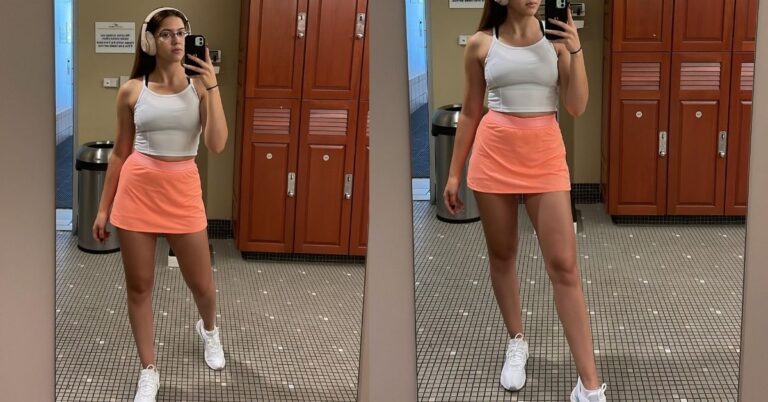
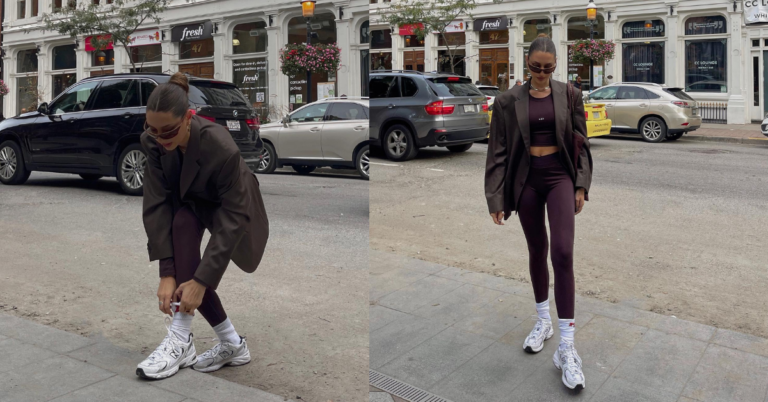
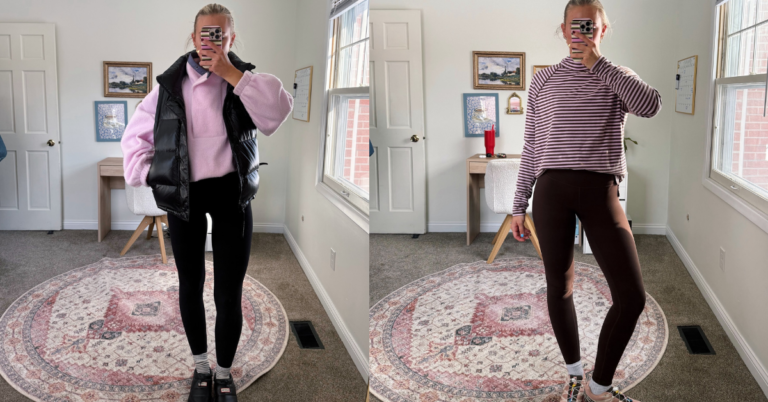
2) Leggings, but done in a better way
- matte leggings
- longer button-up or overshirt worn open
- fitted tank
- clean sneakers
- sunglasses
The overshirt helps so much here because it adds structure and just makes leggings feel way more intentional.
3) The full errand-circuit outfit
- relaxed trousers or wide-leg jeans
- fitted knit
- light jacket
- shoes you can walk in
- crossbody bag
This is one of my favorites because it’s practical, comfortable, and still looks normal in every setting.
4) Elevated athleisure
- matching set (tonal, not logo-heavy)
- long coat or blazer
- clean sneaker or sleek flat
- structured tote
The only thing here is that some matching sets will always feel more casual because of the fabric. So if it looks very loungey to begin with, you can definitely elevate it, but it’s still going to read more casual than tailoring.
5) The warm-weather errand version
- lightweight trousers or shorts that aren’t tiny
- simple tank
- crisp shirt worn open
- sandals that look intentional
- hair clipped back
If layering sounds horrible in the heat, I’d just skip the shirt and go for a nicer tank and better sandals instead.
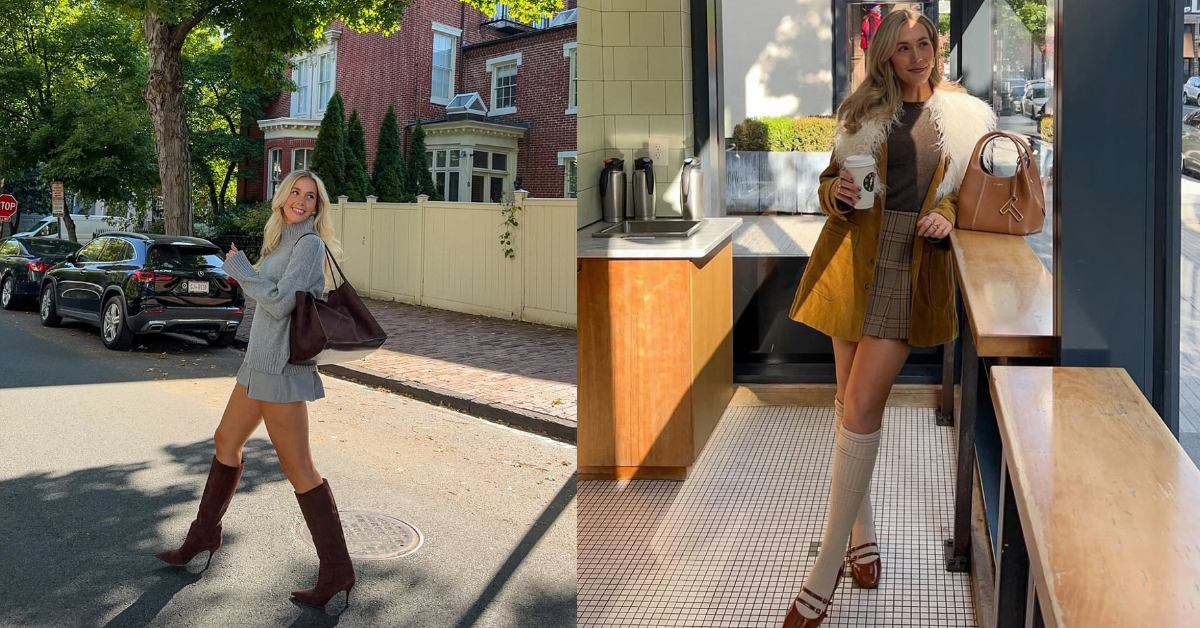
6) The cold-store outfit
- jeans or trousers
- soft sweater
- coat you can carry easily
- boots or loafers
- scarf if you want
It’s not the most exciting look on earth, but at least you won’t freeze the second you walk into a supermarket.
The mistakes that make errand outfits feel off
One really common mistake is when your whole outfit is soft and relaxed and there’s, like, no structure anywhere. That’s usually when it starts to feel a little too thrown on. Even just one topper layer makes it look way more intentional immediately.
Another big one is tired-looking shoes. Shoes say a lot, honestly probably more than people think. You can wear the simplest outfit ever, and it’ll still look better if your shoes look clean.
Proportions matter way more than people realize too. If your bottoms are loose, you usually want a top that’s a little more fitted. And if your top is oversized, your bottoms should feel a bit cleaner and simpler. That contrast is what keeps everything from just looking kind of shapeless.
Worn fabrics also make everything look tired really fast. Pilling, faded black, pieces that got too stretched out – that shows up immediately, especially in daylight or under store lighting.
And honestly, hair makes a difference too. It definitely doesn’t need to be perfect, but having one quick go-to hairstyle that always works – like a low bun, clip twist, or easy ponytail – helps so much.
A few tiny checklists depending on the errand
For groceries, I’d obviously think about a hands-free bag, shoes with decent grip, and some kind of layer because the cold aisles are literally always freezing.
For returns or just walking around the mall, I’d go for comfy shoes, a cute topper layer that still looks good in weird fitting-room lighting, and an outfit that’s easy to take on and off because, tbh, that makes such a difference.
For school pickup, I’d keep the base easy to move around in, throw on one structured layer, and wear shoes you can slip on and off without even thinking about it.
And if there’s even a small chance the day turns into coffee or a casual hang, I’d just make one thing feel a little nicer – like the top, the bag, or the shoes. That’s basically enough.
Step 1: Identify your errand type (this is the whole trick)
Most “I ran into people” moments happen in these categories:
Type A: Quick pop-in (15-45 minutes)
Coffee, pharmacy, one store, quick pickup.
What matters: looking neat from the waist up, easy shoes.
Type B: The circuit (1-3 hours, multiple stops)
Grocery, returns, post office, maybe lunch.
What matters: comfort for movement, layers, and shoes you can actually walk in.
Type C: High-contact errands
School pickup, kids’ activities, hardware store, garden center.
What matters: durability and function, with one intentional styling choice.
Type D: “I might end up somewhere”
You’re doing errands but there’s a decent chance you’ll add a casual meeting, a quick drink, or a friend text.
What matters: an outfit that can shift with one swap (jacket, bag, shoe).
This won’t work if your errands involve getting dirty (paint, plants, dusty warehouses). On those days, dress for function and accept that “polished” is not the priority. You’ll be happier.
Step 2: Build the outfit with the Activity Stack
Use this stack. It works every time.
1) The Base (comfort and movement)
Pick one:
- matte leggings + fitted tank/tee
- straight or relaxed jeans + simple top
- wide-leg trousers + fitted knit
- clean joggers (not baggy, not pilled) + fitted top
Base rules that keep you from looking sloppy
- One piece should be more fitted (top or bottom).
- Avoid all-over volume unless you add structure and sharper accessories.
2) The Topper (the “run into people” insurance policy)
This is what makes your outfit look intentional in public.
Pick one:
- crisp button-up worn open
- denim jacket
- blazer (even a relaxed one)
- trench or long coat
- structured cardigan
If you’re only half-trying, a topper is what saves you.
3) The Shoes (terrain-first)
Shoes decide whether you look put-together or like you’re in survival mode.
Match to the day:
- lots of walking: clean sneakers, supportive flats, loafers
- wet weather: boots
- warm weather: sleek sandals (not beach flip-flops)
- “might meet someone”: shoes that look deliberate, not your oldest pair
4) One detail that reads “finished”
Pick one:
- sunglasses
- small hoops/studs
- a belt
- a structured bag
- hair pulled back neatly
I usually tell people to stop trying to “add personality” with five accessories. One good detail is enough. Two starts to look styled. Three can look like you’re trying too hard for errands.
Step 3: Choose your “social exposure level”
This is the part people forget. Your outfit should match how likely you are to talk to someone.
Low exposure: “Please don’t perceive me”
You still want to look neat, but minimal effort.
Go-to formula:
- leggings + oversized shirt + sneakers + sunglasses
or - jeans + tee + cardigan + clean shoes
Medium exposure: “I might see acquaintances”
You want to look normal and confident, not dressed up.
Go-to formula:
- straight jeans + fitted knit + denim jacket + loafers
or - joggers (clean) + tank + blazer + sneakers
High exposure: “I will definitely run into people”
School events, popular shopping areas, weekend daytime.
Go-to formula:
- trousers + tee + trench + flats
or - matching set + long coat + structured bag + clean sneaker
Outfit formulas you can copy
1) The “I’m approachable but pulled together” uniform
- straight jeans
- fitted tee or knit
- trench or denim jacket
- loafers or clean sneakers
- small earrings
Why it works: classic shapes, no fuss, reads intentional.
2) Leggings that don’t look lazy
- matte leggings
- longer button-up or overshirt worn open
- fitted tank
- clean sneakers
- sunglasses
Key detail: the overshirt creates structure and hides waistband weirdness.
3) The circuit-day outfit (multiple stops)
- relaxed trousers or wide-leg jeans
- fitted knit
- light jacket
- shoes you can walk in
- crossbody bag
This is the “I can carry things and still look normal” look.
4) The elevated athleisure set
- matching set (tonal, not logo-heavy)
- long coat or blazer
- clean sneaker or sleek flat
- structured tote
Trade-off with no solution: some sets will always read casual because of fabric (thin fleece, heavy branding). If the base looks like loungewear, you can elevate it, but it will never look like tailoring.
5) The “hot day errands” version
- lightweight trousers or shorts that aren’t tiny
- simple tank
- crisp shirt worn open
- sandals that look intentional
- hair clipped back
This is optional. Skip it if you hate layering in heat. Just choose a nicer tank and better sandals.
6) The “cold store lighting” outfit
- jeans or trousers
- soft sweater
- coat you can carry easily
- boots or loafers
- scarf if you want
It’s not glamorous, but you won’t freeze in the supermarket.
The two-minute upgrade if you already got dressed and suddenly panic
This is the little reset I’d do if I was already dressed and then suddenly realized I might actually see people.
I’d throw on my best jacket or topper, switch into cleaner shoes if I could, add one little thing like earrings or sunglasses and quickly fix my hair so it looks a little more put together.
That’s basically it.
I really wouldn’t overthink it more than that, tbh.
If you want a simple “default errand outfit”
Honestly, I love having one default outfit per season because it makes life so much easier:
- Default A: straight jeans + fitted tee + denim jacket + clean sneakers
- Default B: matte leggings + long button-up + tank + sneakers
- Default C: trousers + knit top + trench + flats
And that’s kind of the whole point. Not to create the perfect errand outfit every time, but to make sure you have a few easy combinations that save you from those annoying surprise-social moments.
Just a little note - some of the links on here may be affiliate links, which means I might earn a small commission if you decide to shop through them (at no extra cost to you!). I only recommend and mention products I truly stand behind and that I've tested myself.
And as you know, I seriously love hearing from you - that means the world to me! If you recreate something, feel free to share it here in the comments or send me a message. I'm always excited to connect with y'all! ✨🤍
Xoxo Luna