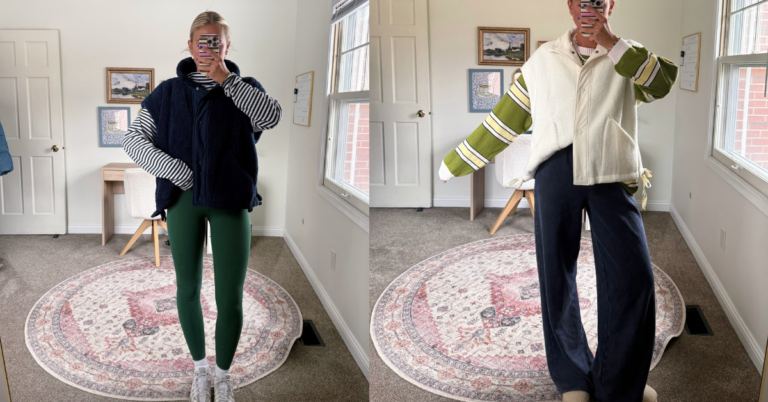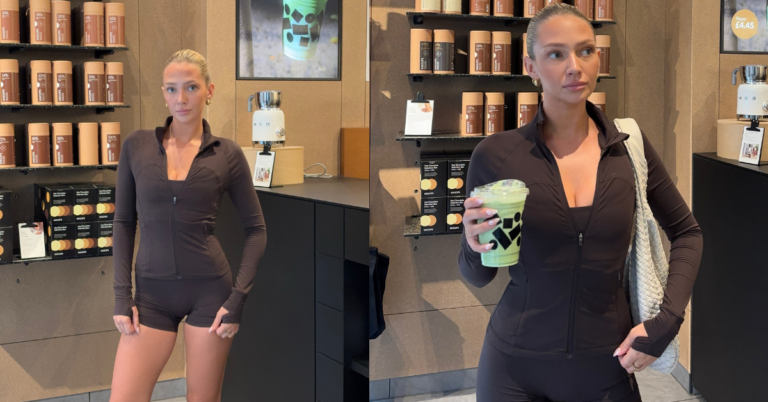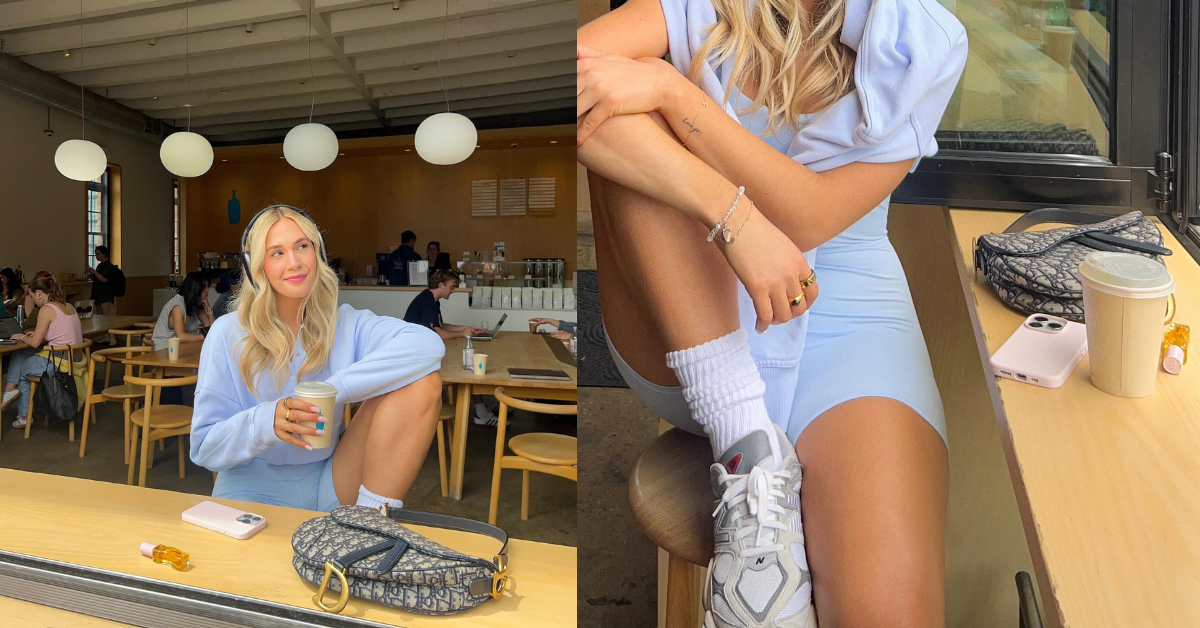
Athleisure can honestly be a little tricky, because these are usually the clothes you wear the hardest without even thinking about it.
You sit in them, walk in them, throw bags over your shoulder while you’re wearing them, wash them constantly, and obviously you still want them to look good for as long as possible. And I swear, that’s exactly why it feels so annoying when something looks amazing at first and then literally starts pilling, fading, or stretching out way too fast.
Most of the time, fabric disappointment basically comes down to one simple thing:
You bought something because it felt really soft, but you also expected it to be super durable. Or you bought something really stretchy and compressive, but then treated it like a regular cotton piece in the wash. Or you fell in love with a deep black or navy fabric, but didn’t really think about the fact that darker colors usually show wear faster.
And once I actually understood that, shopping got so much easier. Because instead of buying something just because of the brand name or because it sounded amazing online, I started looking at fabric in a way more practical, everyday way.
The three things that usually go wrong first
- For the least pilling, look for filament synthetics (nylon/polyester) and smooth-faced knits. Pilling tests like ISO 12945 and ASTM pilling methods exist for exactly this reason.
- If it’s brushed/peached/fuzzy, assume higher pilling risk unless the brand explicitly backs it up with testing or fabric engineering.
- For fade resistance, avoid hot wash + high dryer heat. Cold-water washing is commonly recommended to help preserve color and longevity.
- For “stretch-out” resistance, keep elastane realistic (often 10-20% in performance knits is plenty) and treat it gently; elastane is sensitive to heat.
- Wash athleisure inside out, don’t overload, and use mesh bags for high-friction items.
- Skip fabric softener on workout/athleisure gear: it can leave residue that interferes with performance fabrics.
If you only do one thing: buy smooth-faced, matte knits and stop putting them through high-heat drying. Heat is where stretch and color go to die.
The decision framework: the “3-failure filter”
When you’re shopping, run the fabric through this quick filter:
1) Will it pill?
Higher risk
- Brushed / “buttery” / “peached”
- Very fuzzy, cozy hand-feel
- Looser knits that snag easily
- Anything you’ll wear under backpack straps or with thigh rub
Lower risk
- Smooth-faced knits
- Tighter, denser knit structures
- Fabrics described as “interlock,” “double knit,” “ponte,” “scuba,” or “warp knit” (terms vary by brand, but they usually mean denser structure)
Pilling resistance is a known, measurable property, and standards like ISO 12945 exist specifically to evaluate pilling/fuzzing/matting.
2) Will it fade?
Higher risk
- Very dark dyes (black, navy) that rely on surface dye uptake
- Heavy wash frequency + hot water + high heat drying
- Rough wash loads (towels, jeans, zippers) rubbing on the surface
Cold water is widely recommended as a way to help preserve garments (including reducing fading risk).
3) Will it stretch out?
Higher risk
- High elastane + thin fabric (feels great, but fatigue shows faster)
- Heat exposure (dryer, hot water)
- Hanging heavy wet leggings by the waistband (gravity will do its thing)
General care guidance for elastane warns against hot water and high heat because it can shrink or lose elasticity.
Deep dive: what actually causes pilling, fading, and stretch-out
A) Pilling: why “soft” often pills
Pills form when fibers work loose, tangle on the surface, and get rolled into little balls by friction. Standards like ISO 12945 (pilling box method) and ASTM pilling tests exist because different fabrics behave very differently under controlled rubbing/tumbling.
What matters most in athleisure:
- Surface friction (thigh rub, seatbelts, backpack straps)
- Fiber/yarn structure (filament vs staple, tightness, twist)
- Surface finishing (brushed, sanded, “peached”)
Here’s the part that feels unfair: a fabric can be strong and still pill. In fact, very strong fibers can hold onto pills longer, so they stay visible. (This is one reason some synthetics look “pilled” rather than having pills break off quickly.)
The real-world takeaway:
If a brand sells “buttery soft” leggings, treat them like suede: gorgeous, but you don’t want to drag them through unnecessary abrasion.
B) Fading: it’s not just “bad dye”
Fading is often just surface wear. Every wash cycle is controlled abrasion: clothes rub against each other and the machine. Washing inside out reduces surface friction on the visible side and is commonly recommended to help slow fading and pilling.
Heat matters too:
- Hot water and high dryer heat can accelerate color loss and general wear.
- Cold-water washing is widely promoted as gentler for clothes and helpful for longevity.
If you want “proof language,” this is where testing comes in. AATCC has standardized methods like AATCC 61 for accelerated laundering colorfastness, used to evaluate how color holds up under laundering conditions.
The real-world takeaway:
“Fade resistant” is most believable when a brand references a test method (AATCC/ISO/ASTM) or gives a rating.
C) Stretching out: elastane is amazing, but it’s not immortal
Elastane (spandex/Lycra) gives recovery. But it’s also the part most likely to degrade with:
- heat (dryer, hot wash)
- repeated over-stretch (too-small sizing, constant tugging)
- time + agitation
Care guidance commonly warns that elastane is sensitive to high temperatures and can lose elasticity.
The real-world takeaway:
If your leggings are “stretching out,” it’s often laundry heat (or sizing) more than “bad quality.”
What to look for on the label: fabric “grades” for durability
The most durable everyday athleisure blends (in real life)
These aren’t the only good options, but they’re consistently easier to live with:
- Nylon (polyamide) + elastane
- Often feels smoother, strong, and “sleek”
- Great for leggings and bras
- Pilling depends on knit + finish, but many premium performance fabrics live here
- Polyester + elastane
- Often excellent at color retention and durability, depending on dyeing/finishing
- Can be slightly less “silky” than nylon, but modern polyester can feel very soft
- Polyester/nylon blends + elastane
- Can balance strength, softness, and color depending on construction
- Ponte / double knit with elastane
- More “pants-like” and polished
- Often resists bagging because the structure is denser
Where people get disappointed
- Cotton-rich leggings: comfortable, but more likely to bag and show wear faster in high-friction spots.
- Ultra-thin, ultra-soft performance knits: comfy, but more prone to surface pilling if brushed.
A really quick fabric test I like to do (in 90 seconds)
If I’m shopping in person, there are a few super simple things I check right away.
1) The rub test (pilling risk)
I rub the fabric against itself for a few seconds.
If it immediately starts looking fuzzy, I already know it probably won’t age that well.
2) The stretch-and-snap test (recovery)
Stretch a small section 20-30%, hold 2 seconds, release.
- Good recovery: snaps back with no ripples.
- Weak recovery: looks slightly “wavy” after release (early sign it may bag out).
3) The shine check (looks older faster)
Hold it near a window.
- High sheen often shows abrasion and “seat wear” sooner.
- Matte hides wear better and reads more elevated.
4) The thickness check (opacity and longevity)
Thin isn’t automatically bad, but thin + high elastane + brushed surface is the trifecta for quicker visible wear.
Buying shortcuts: the questions that actually help
If you’re shopping online, you usually can’t touch the fabric. So use better questions.
Ask (or look for) these signals
- “Is this fabric brushed/peached?” (If yes, you accept higher pilling risk.)
- “Is it warp-knit or interlock/double knit?” (Often more stable.)
- “Do you have pilling test results (ISO 12945 / ASTM)?”
- ISO 12945-1 is the rotating pilling box method.
- ASTM has pilling methods like D3512 (random tumble) and D4970 (Martindale).
- “Do you have colorfastness testing (AATCC 61)?”
Brands won’t always answer, but the ones that do tend to be more fabric-serious.
The laundry habits that make the biggest difference
Honestly, a lot of fabric problems don’t even start when you wear the item. They start in the laundry.
A few things I always try to do now:
- wash athleisure inside out
- use cooler water
- avoid overstuffing the machine
- skip high dryer heat
- avoid fabric softener
High heat is especially the one thing I really try to avoid, because that’s where a lot of the stretching, fading, and general wear starts showing up.
If I can air-dry something, I usually do.
And if not, I keep the heat low.
A few super common mistakes that ruin athleisure faster
One mistake I used to make all the time was washing my leggings with towels or heavier denim. Tbh, that creates way more friction than you’d think, and it just roughs up the fabric way faster.
Another big one is buying leggings too small because you want that really snatched, compressive feel. I totally get it, obviously – it’s tempting. But if the fabric is constantly under that much tension, it’s usually gonna lose its shape a lot sooner.
And the third one is falling for those super soft finishes without really thinking about how they’re gonna wear over time. They feel amazing at first, of course, but they usually need a little more care than you’d expect.
What I’d choose depending on what matters most to you
If you want leggings that stay looking new the longest
- Prioritize smooth face, dense knit, matte finish
- Choose darker colors only if you’re okay treating them gently (inside out, cold wash)
If you hate pilling more than anything
- Avoid brushed/peached fabrics
- Avoid fuzzy “soft-touch” finishes unless the brand specifically claims anti-pilling and seems credible about testing
If you care most about color staying deep (especially black)
- Wash inside out, cold, gentle, and reduce dryer heat.
- Look for brands that talk about colorfastness testing (AATCC 61).
If you keep stretching out waistbands and knees
- Choose denser knits and avoid high heat drying.
- Consider ponte/double-knit “legging pants” for more structure.
The one trade-off that’s honestly hard to avoid
One thing I’ve learned is that you usually can’t have all three at once:
super soft,
super lightweight,
and super durable.
The really soft, almost see-through feeling fabrics are usually the ones that start showing wear faster.
That doesn’t automatically mean they’re bad, obviously. It just means you should kinda know what you’re signing up for.
So now I’m way more intentional about it. If I buy something that’s super soft, I already know I have to be a little more careful with it.
FAQ
Are nylon or polyester leggings better for pilling?
Honestly, either one can pill. It really just depends way more on the knit and how the fabric’s finished. Your best bet is to go for leggings with a smooth, dense fabric and take care of them in a way that cuts down on friction. Brands also use tests like ISO 12945 and ASTM to check how well fabric holds up against pilling.
How can I tell in-store if leggings will pill?
Do a quick rub test. If the fabric starts fuzzing up right away, that’s basically your sign that the fibers are already lifting. Also, check if the fabric feels brushed or peachy, because that kind of finish usually pills faster.
What laundry steps actually prevent fading?
Wash them inside out in cold or cool water, don’t cram the machine, and skip high heat when you dry them. Cold water is usually the safest move if you want your clothes to keep their color and hold up better.
Is fabric softener really that bad for athleisure?
Yeah, it kind of is, tbh. It can mess with the moisture-wicking and leave buildup on the fabric, which is obviously not what you want with workout clothes.
Why do my thighs pill leggings so fast?
Because that area gets a ton of friction and pressure, literally every time you move. Even really good leggings can wear out faster there. If you actually want to avoid that, go for a smoother, tighter-knit fabric and skip anything brushed.
How do I stop leggings from stretching out?
Avoid heat, don’t overstretch them, and make sure you’re wearing the right size. That part matters more than people think, honestly.
What if I already have pilling?
You can remove pills carefully with a fabric shaver. Consumer guidance often recommends gentle removal methods rather than pulling pills off.
Just a little note - some of the links on here may be affiliate links, which means I might earn a small commission if you decide to shop through them (at no extra cost to you!). I only recommend and mention products I truly stand behind and that I've tested myself.
And as you know, I seriously love hearing from you - that means the world to me! If you recreate something, feel free to share it here in the comments or send me a message. I'm always excited to connect with y'all! ✨🤍
Xoxo Luna