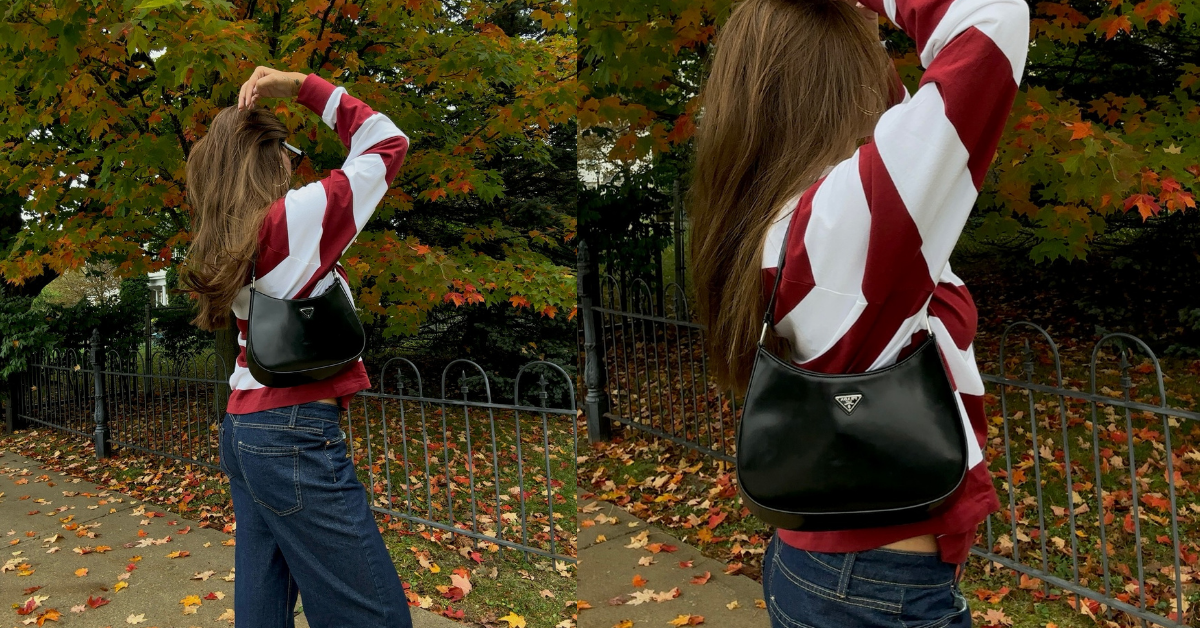
I honestly think comfort-first dressing gets misunderstood all the time, because people throw two totally different things into one category.
There’s comfortable clothing, meaning soft pieces, easy fits, things you can actually move in and wear all day without getting annoyed. And then there’s comfortable styling, which is the part that makes those same pieces look intentional once you leave the house.
And that distinction matters so much. Because you do not need to dress like a completely different person just to look more put-together. You usually just need a simple little system that keeps the comfort, but adds enough shape and polish that the outfit actually feels finished.
Also, and I think this is a big one – when you’re uncomfortable in what you’re wearing, it shows immediately. You keep adjusting things, pulling at the fabric, thinking about your outfit way too much, and at that point it doesn’t even matter how cute it looked in theory. So for me, the goal is never perfection – I just want fewer annoying outfit moments throughout the day.
The simple formula I come back to again and again
The easiest way I think about comfort-first outfits is this:
comfort + structure + finish
That’s it.
The comfort part is your base. That’s the piece that actually feels good on your body and that you can live in all day without wanting to change five minutes later.
The structure part is what makes the outfit look more intentional. This is usually some kind of outer layer that gives the whole look more shape, like a trench, a blazer, an overshirt, or a coat.
And then the finish is just that one little detail that makes it feel like an outfit instead of something you threw on half asleep. Usually that’s the shoes, the bag, or one small extra detail.
The Comfort-First Style Framework
1) Comfort: the base you don’t fight with
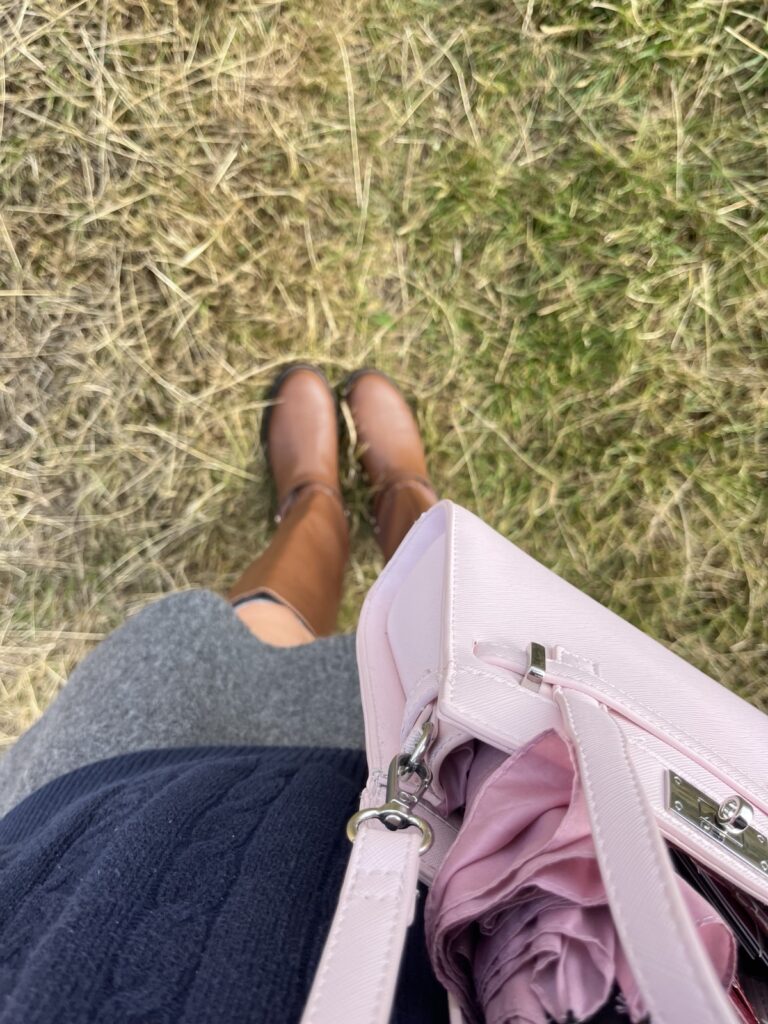
This is the part that touches your body and decides whether your day is good.
Comfort signals that still look good
- Matte leggings, straight knit pants, joggers that aren’t super baggy
- Ribbed tanks, tees, soft knits, sweatshirts in solid colors
- Fabrics that breathe when you run warm (cotton, or true moisture-wicking pieces)
Comfort destroyers
- Waistbands that pinch when you sit
- Seams that hit exactly where you bend (hips, underarms, inner thigh)
- Stiff fabrics that feel fine standing but annoying when seated for hours
A practical way to think about it: if something creates pressure points or forces you into awkward positions, fatigue builds faster. Ergonomics training materials consistently emphasize that awkward postures reduce capacity and increase fatigue.
2) Structure: the “adult supervision” layer
Structure is what makes comfortable clothes look intentional.
Pick one:
- Long coat or trench
- Blazer (relaxed, not tight)
- Overshirt or chore jacket
- Crisp button-down worn open like a jacket
I usually tell people to stop buying more “cute comfy sets” and buy one truly great structure layer instead. It’s the highest return item in a comfort wardrobe.
3) Finish: the small details that change the message
Finish is where “loungewear” becomes “outfit.”
Choose 1–2:
- Cleaner shoes (minimal sneakers, loafers, boots, sleek flats)
- A real bag (structured crossbody, small backpack that doesn’t read gym)
- Simple jewelry (small hoops, chain, watch)
- Sunglasses, belt, or a tidy hair choice
This is optional. Skip it if accessories annoy you. Structure alone can carry the look.
The 60-second outfit system I’d actually recommend
When I want to get dressed quickly and still feel good in what I’m wearing, this is basically what I do:
- Pick a base silhouette
- Tight bottom + looser top (leggings + oversized tee/knit)
- Relaxed bottom + fitted top (joggers + ribbed tank)
- Matching set (top and bottom same color family)
- Add exactly one structured piece
Coat, blazer, overshirt, or crisp button-down. - Do the shoe reality check
If your shoes are meant for training, the outfit will read sporty. If they’re stable and walkable, you’ll look more “day-ready.” For walking comfort, foot and sports medicine guidance commonly emphasizes stability, cushioning, and a smooth gait. - Add one finisher
Bag or jewelry. Done.
A few comfort truths I’ve learned the hard way
Truth 1: Softness and durability fight each other
One thing I had to accept is that the softest, stretchiest, most buttery fabrics are not always the ones that stay looking perfect forever. Usually the super soft stuff feels amazing, but it can also show wear a bit faster. That’s just one of those trade-offs.
Truth 2: Temperature control is style
Another thing is that temperature matters way more than people talk about. If I’m too hot, I get annoyed fast. If I’m freezing, I’m uncomfortable the entire time.
So now I think way more about layering properly instead of just picking whatever looks cute on the hanger.
Truth 3: The wrong shoes ruin the whole day
And shoes tbh, can make or break the whole day. If my shoes are uncomfortable, I don’t care how nice the outfit looks. I’m not going to feel good in it.
So I always pay attention to whether I can actually walk properly in them and wear them for longer than twenty minutes.
The mistakes that make comfy outfits look less polished
Mistake 1: All soft shapes, no structure
Fix: keep the comfy base, add a coat, blazer, or overshirt.
Mistake 2: Too many “athletic” signals at once
Leggings + hoodie + technical sneakers + gym tote reads gym.
Fix: keep leggings + hoodie, but swap either the shoes or the bag, and add a structured outer layer.
Mistake 3: The fabric makes you sweaty or itchy
Dermatology guidance commonly points to breathable fabrics (like cotton) for comfort, and moisture-wicking options can help when you’re sweating.
Fix: choose breathable base layers, and avoid piling on synthetic layers if you run hot.
Mistake 4: Laundry is sabotaging you
If your athleisure feels less breathable or starts holding odor, it’s often laundry buildup.
Many laundry sources warn that fabric softener can leave residue that reduces moisture-wicking performance in athletic wear.
Fix: skip softener on performance gear and lean on proper detergent and gentler drying.
Mistake 5: “Comfort” means “I gave up”
Comfort can still look sharp. The difference is cohesion: fewer colors, fewer logos, cleaner lines.
Easy comfort-first outfits I’d actually wear
1) Errands and everyday life
Goal: comfy, quick, still presentable.
- Base: leggings or straight knit pants + tee/ribbed tank
- Structure: overshirt or trench
- Finish: clean sneakers + crossbody
Works because the overshirt/trench gives shape and hides “waistband anxiety.”
2) Casual dinner or meeting a friend
Goal: you still feel like you, but it reads “intentional.”
- Base: sleek joggers + fitted knit top
- Structure: blazer or long coat
- Finish: loafers/boots OR minimal sneakers + small bag
If you refuse loafers, that’s fine. Keep sneakers, but make everything else sharper.
3) Travel days and long car/train days
Goal: zero pinching, easy layering, still decent in photos.
- Base: soft trousers/joggers + fitted tee
- Mid: zip hoodie or cardigan-coat
- Outer: light jacket if needed
- Finish: stable walking shoes
Also: temperature swings are real. Layering lets you adapt.
4) Comfort-first workwear (casual office or hybrid)
Goal: “work appropriate” without discomfort.
- Base: ponte-style pants, knit trousers, or tailored joggers
- Top: knit or button-down
- Structure: blazer/overshirt
- Finish: loafers, boots, or clean minimalist sneakers (if your office allows)
This won’t work if your workplace requires traditional suiting. In that case, comfort comes from fit (waistband that doesn’t dig, stretch in the fabric, proper shoe support), not from athleisure pieces.
5) Hot weather comfort
Goal: stay dry and unbothered.
- Base: breathable tee/tank + relaxed shorts or loose pants
- Structure: light button-down worn open (sun + air conditioning)
- Finish: sandals with support or clean sneakers
If you sweat a lot, moisture-wicking socks and true moisture-wicking fabrics can make a noticeable comfort difference.
6) Cold weather comfort
Goal: warm without bulk and without feeling restricted.
Use the base/mid/outer idea:
- Base: comfortable layer that manages moisture
- Mid: warm knit/fleece
- Outer: coat that blocks wind
Then keep the silhouette clean: one fitted layer, one relaxed layer, one structured layer.
The Comfort Capsule: 12 pieces that do most of the work
You don’t need all of these, but if you want comfort to look good consistently, these are the “bridge” items:
- Matte leggings (minimal seams)
- Straight knit pants or ponte pants
- Tailored joggers (sleeker fabric)
- Ribbed tank
- Great tee (thicker, holds shape)
- Soft knit sweater
- Hoodie you actually like (minimal branding)
- Crisp button-down (wear open like a jacket)
- Overshirt/chore jacket
- Long coat or trench
- Clean sneakers
- Comfortable non-sneaker shoe (loafers or ankle boots)
This list is boring on purpose. Boring pieces make “comfort” look polished.
A simple comfort checklist before you buy anything
The seat test (most important)
Sit down. Lean forward. Cross your legs. If it pinches, rides, or twists, it’s not a comfort piece.
The seam test
Run your fingers along inner thigh, underarm, waistband seams. If you can feel a raised seam now, you’ll hate it later.
The sweat plan
If you run hot, don’t buy “cute” fabrics that trap heat. Breathable cotton can help comfort, and moisture-wicking labels matter when you sweat.
The shoe test
Walk around the house. You want stability and a smooth walk.
FAQ
Can comfort clothes look polished without being expensive?
Yes. Most “polished” comes from structure (outer layer), cohesion (simple palette), and finish (shoes/bag). Price helps, but it’s not the main driver.
What’s the fastest way to look more put together?
Add a structured outer layer and switch to cleaner shoes. Even a basic tee and leggings look different with a coat on top.
How do I stop athleisure from looking worn out fast?
Buy fewer, better base pieces and care for them properly. If you use performance fabrics, avoid fabric softener because it can reduce moisture-wicking performance by leaving residue.
I hate stiff jeans but want “real pants.” What should I try?
Ponte pants, knit trousers, straight knit pants, or relaxed trousers with stretch. They read more like pants than leggings while feeling close to lounge wear.
What if I want comfort but don’t like the athleisure look?
Go “soft tailoring”: relaxed trousers, knits, button-downs, long coats, and comfortable non-sneaker shoes. It’s comfort-first without sporty cues.
Just a little note - some of the links on here may be affiliate links, which means I might earn a small commission if you decide to shop through them (at no extra cost to you!). I only recommend and mention products I truly stand behind and that I've tested myself.
And as you know, I seriously love hearing from you - that means the world to me! If you recreate something, feel free to share it here in the comments or send me a message. I'm always excited to connect with y'all! ✨🤍
Xoxo Luna